
One fantasy sits at the heart of Isekai and action anime: the dream of total power. We watch ordinary people reborn as gods, able to flatten a planet with a single blast. It is a thrilling sight. But a sight is not a story. One question separates a passing power fantasy from a lasting epic. What happens when the fighting stops? What is left when a god meets a problem he cannot punch?
That is the puzzle of the Overpowered Protagonist. Overlord captures the cold, scheming loneliness of total power. But the genre’s soul lives in the quiet moments of other stories. The best of them do not use power as a solution. They use it as a backdrop, so they can explore something better: the strength found in leadership, friendship, and being open to hurt.
Look at the bonds in Naruto. Look at the community built in That Time I Got Reincarnated as a Slime. Look at the journeys of anime heroes and of figures from Indian myth. The greatest characters are not defined by the power they hold. They are defined by the moments they choose not to use it.
The Empathy of a Leader: Reincarnated as a Slime

That Time I Got Reincarnated as a Slime could easily have been a conquest story. Rimuru Tempest becomes one of the strongest beings in his new world almost at once. But the series keeps putting his magic second. His real skill is empathy. The story’s biggest moments are not battles. They are acts of leadership and of welcome.
When the Direwolves threaten the Goblin village, Rimuru does not reach for slaughter. He talks. He offers the wolves a place, a purpose and a name, and turns deadly enemies into his most loyal allies. These moments of connection are the heart of the series. Shion’s death during the Falmuth attack lands so hard for one reason: Rimuru’s power could not stop it. His rise to Demon Lord that follows is not a triumphant upgrade. It is a grim necessity, a weight he takes on to protect what he has built. His strength is not in his spells. It is in building a nation where lizardmen, goblins and orcs sit at the same table.
The Bonds of a Hero: The Power of Purpose


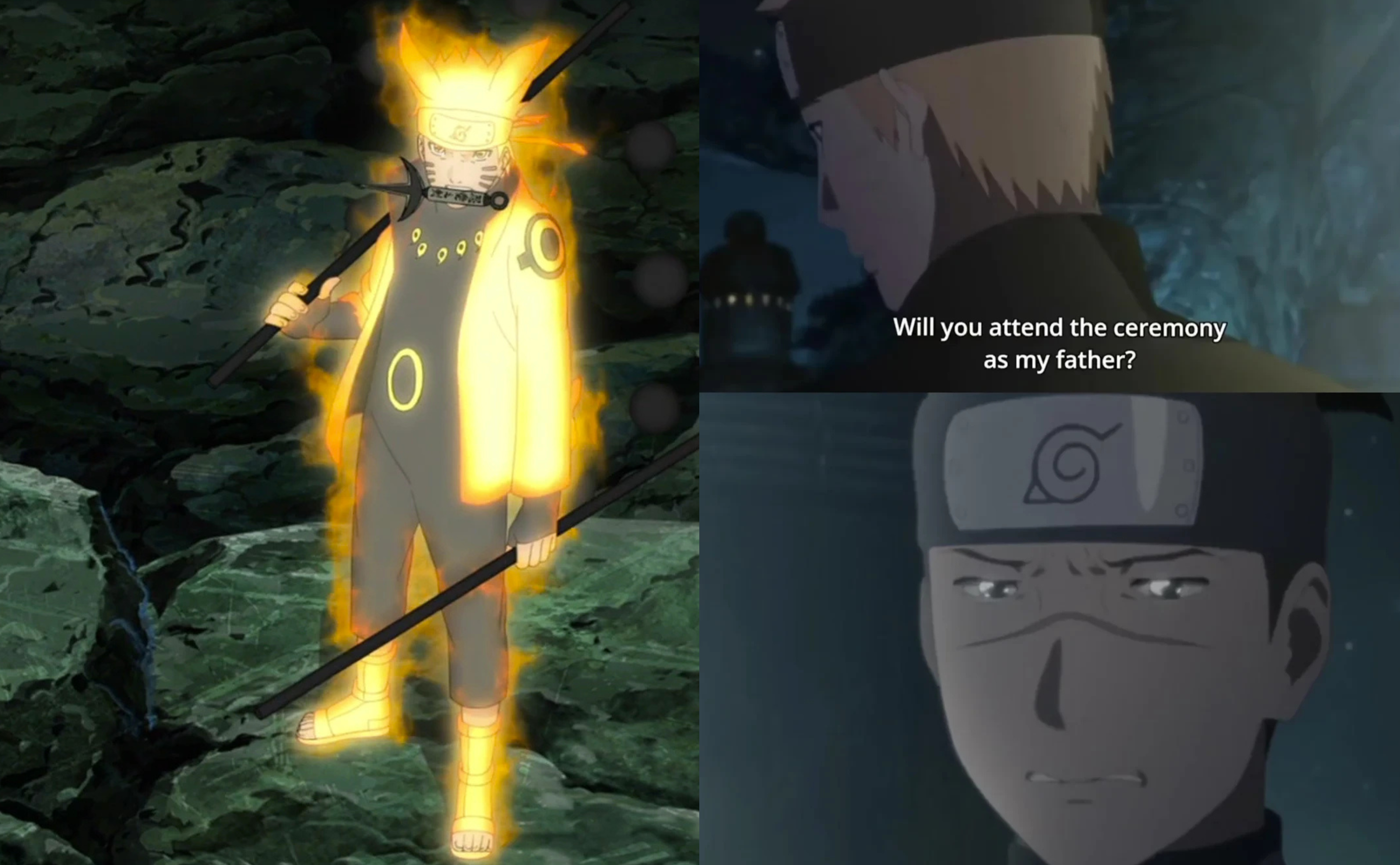
The cure for hollow power is purpose. The great epics show this best. In Naruto, we care about Naruto Uzumaki’s god-like strength because we watched the painful road he took to earn it. But his finest moments have nothing to do with Rasengans. He asks Iruka-sensei to stand as his father at his wedding. That scene defines him. All that power could never give him the family he wanted.


This truth has driven the giants of Shonen for decades. In Dragon Ball Z we remember Goku’s Super Saiyan transformation. But we cry at Vegeta, who gives his life for his son. In One Piece, the moment that breaks us is not a great battle. It is the death of Ace, where all of Luffy’s power counts for nothing.

The purest form of selfless power is Lord Hanuman from the Ramayana. He can lift mountains and leap across oceans. Yet his story is never about his own glory. What defines him is his Bhakti — his devotion to Lord Rama. His power is a divine gift, spent only in a righteous cause. He is a god who chooses to serve. That idea, that power must be tied to purpose and humility, is the heart of the shonen spirit. It is why we cheer for these heroes. Their strength is not in their fists. It is in the bonds they fight to protect.
The Blindness of Power: The Tragedy of Madara Uchiha and Karna


Those stories show what power is for. Others show how empty it is on its own. The blindness of the all-powerful takes its saddest form in Madara Uchiha. Once he reached god-like strength, he became so sure of his own vision — a forced peace through the Infinite Tsukuyomi — that he could not see the truth. He thought he was pulling the strings. He was a pawn in a plan run by Black Zetsu, a creature he was too strong and too proud to notice. His power was a prison. It sealed him off from reality. This tragic blindness, born from immense power, is a recurring theme among the Uchiha, most notably in the impossible choice faced by Itachi.
The same figure appears in the Mahabharata, in Karna. He was born with divine armor that made him almost impossible to kill. His power was matched only by his hunger to be recognised and accepted. The cunning prince Duryodhana saw that hunger and fed it, giving Karna the friendship and status he ached for. That debt blinded him. He knowingly fought for an unjust cause, against his own brothers, in a ruinous war. Like Madara, his power was chained to a flawed idea. He became a puppet to a master he was too proud to question. Both men outfought everyone on the field. Both were beaten by a lie their pride would not let them see.

The comic version of this tragedy is One-Punch Man. Saitama has reached the top of physical power, and it has cost him his link to the world. He is a bored god. The other heroes fight the spectacular battles. Saitama’s arrival is the punchline. He is not chasing more power. He is chasing a supermarket sale — and a way to feel something again.
The Weight of a Soul
The Overpowered Protagonist is not a storytelling problem. It is an opening. The best of these stories treat overwhelming power as a beginning, not an end. They know a character’s real strength is not measured by who they can beat. It is measured by who they can protect, forgive and love. What stays with us is never the world-breaking explosion. It is the quiet talk, the shared meal, the tears of a friend, the arms of a teacher who became a father.
These are the problems that cannot be solved with a punch. They require the full weight of a soul. And that, in the end, is a power far greater than any god-machine.
All images are screenshots from their respective anime series or are in the public domain, and are used under Fair Use for the purpose of criticism and commentary. Sensei Square is an unofficial fan work and is not affiliated with the original copyright holders. © All rights reserved to their respective owners.